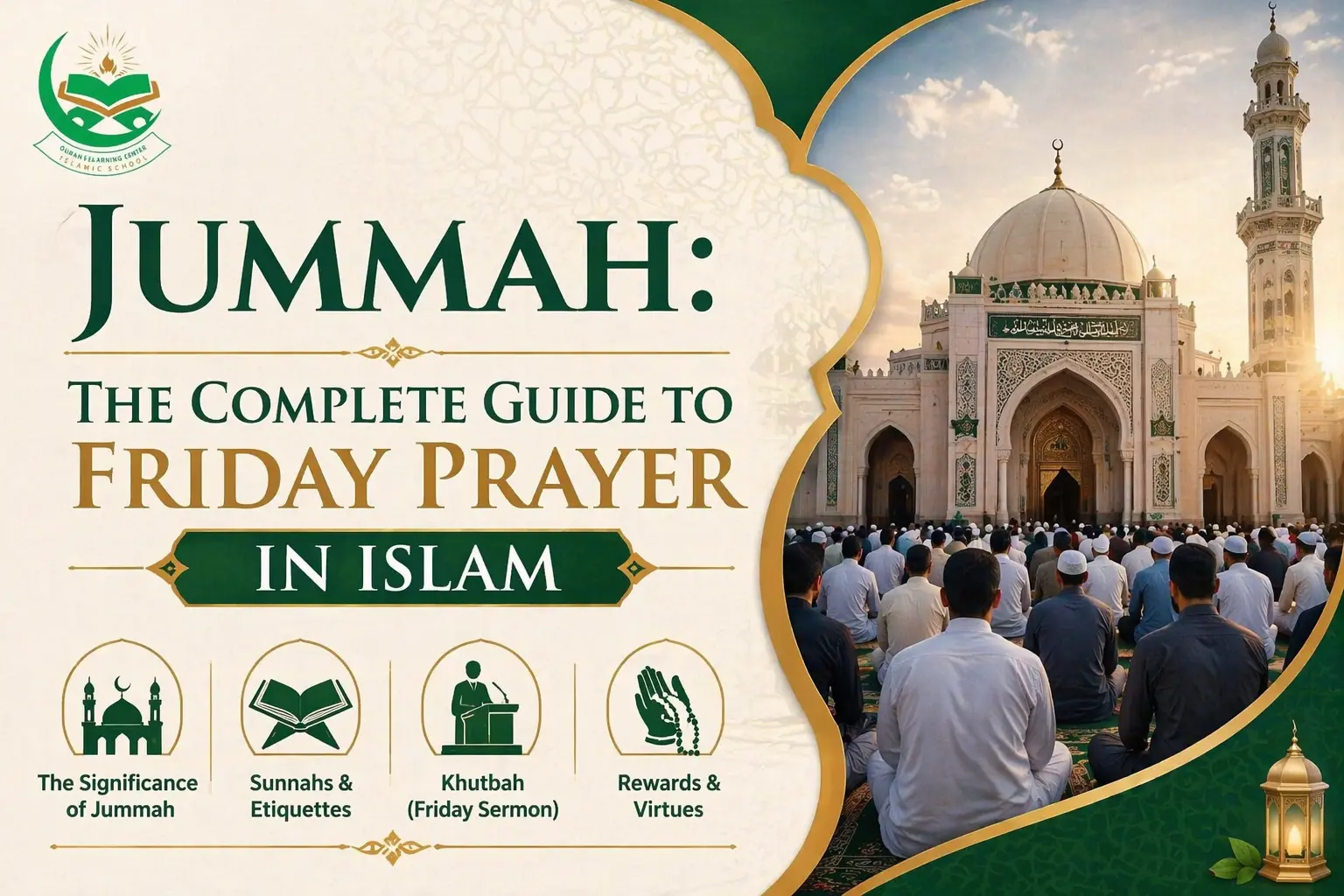
There’s something different about Friday. Even before the Adhan is called, there’s a quiet awareness in the heart of every Muslim a reminder that this day belongs to Allah in a special way. Jummah (Friday) is not just another day of the week in Islam. It is the best day of the week, described by the Prophet Muhammad ﷺ as the “master of all days” (Sayyidul Ayyam). For Muslims living busy lives in the USA and Canada juggling work, school, and family Jummah is that weekly anchor. That moment to pause, reconnect, and return to what truly matters.
Whether you’re a lifelong Muslim looking to deepen your practice or someone just beginning to learn about Islam, this guide will walk you through everything you need to know about Jummah its meaning, its rules, its blessings, and how to make the most of this sacred day.
Quick Answer: What Is Jummah in Islam?
Jummah is the Friday congregational prayer in Islam, performed in place of the regular Dhuhr (midday) prayer. It consists of a sermon (Khutbah) delivered by an imam, followed by two Rak’ahs of prayer. Jummah is obligatory for adult Muslim men and holds the highest status of any day in the Islamic week.
What Is Jummah in Islam?
The word “Jummah” (جمعة) comes from the Arabic root meaning “to gather.” It is the day of congregation when Muslims come together at the masjid to listen to the Khutbah and pray in unison. Allah (SWT) commands this gathering in the Quran:
“O you who have believed, when the call to prayer is made on the Day of Jumu’ah, then proceed to the remembrance of Allah and leave trade. That is better for you, if you only knew.” (Surah Al-Jumu’ah, 62:9)
This verse makes the obligation clear. Jummah is not optional for those who are able it is a divine summons.
Importance of Jummah (Friday Prayer)
The Prophet Muhammad ﷺ said: “The best day on which the sun rises is Friday.” (Sahih Muslim)
That alone tells us everything about the status of this day. But there’s more. According to authentic hadith:
- Adam (AS) was created on Friday
- He entered Jannah on Friday
- The Day of Judgment will occur on a Friday
- There is a special hour on Friday in which any sincere dua is accepted by Allah
For Muslims in North America where Fridays are often packed with meetings, errands, and deadlines understanding this significance can completely shift how you approach the day. Jummah isn’t an interruption to your week. It is the highlight of your week.
Is Jummah Compulsory?
Yes. Jummah prayer is fard (obligatory) for every adult Muslim man who is sane, free, and not traveling. Missing three consecutive Jummah prayers without a valid excuse is a serious matter the Prophet ﷺ warned that Allah may seal such a person’s heart. For women, elderly individuals, travelers, and the sick, Jummah is not obligatory, though women are permitted to attend.
How to Perform Jummah Prayer Step-by-Step
If you’re new to Jummah or want a clear refresher, here’s how it works:
- Make Ghusl (full body purification) — This is a highly emphasized Sunnah for Jummah.
- Wear clean, neat clothing — Dress your best. This is a day of gathering before Allah.
- Apply perfume (for men) — A beloved Sunnah of the Prophet ﷺ.
- Go to the masjid early — The earlier you arrive, the greater the reward.
- Recite Durood and make dua while waiting.
- Listen attentively to the Khutbah — Talking during the sermon is prohibited.
- Pray two Rak’ahs of Jummah behind the imam.
- Make dua after the prayer — Especially in the last hour before Maghrib, which is the blessed hour.
How Many Rak’ahs Are in Jummah Prayer?
The Jummah prayer itself consists of 2 Rak’ahs, prayed in congregation after the Khutbah. Before and after, there are Sunnah prayers 4 Rak’ahs Sunnah before Jummah and 4 (or 2) Rak’ahs Sunnah after, depending on the scholarly opinion followed.
Jummah Khutbah: What You Need to Know
The Khutbah (sermon) is an essential and obligatory part of Jummah. Without it, the prayer is not valid. The imam delivers two short sermons, sitting briefly between them. During the Khutbah:
- Silence is obligatory — You must not talk, check your phone, or even gesture to others to be quiet (according to many scholars).
- Face the imam and listen with full attention.
- It serves as a reminder (Dhikr of Allah) — which is the spiritual purpose of the entire gathering.
Many masajid in the USA and Canada now offer Khutbahs in English or bilingual formats, making it easier for younger generations and new Muslims to benefit fully.
Sunnah Acts to Do on Jummah
Making the most of Jummah means following the Sunnah of the Prophet ﷺ throughout the entire day not just during prayer time.
- Ghusl — Perform a full ritual bath before heading to the masjid. The Prophet ﷺ said: “Whoever takes a bath on Friday like the bath of Janabah…” (Bukhari)
- Wear clean clothes — Put on your best outfit. Many Muslims reserve a special set of clothes for Jummah.
- Use perfume (for men) — A small but beautiful act of honoring the day.
- Recite Surah Al-Kahf — The Prophet ﷺ said that whoever recites Surah Al-Kahf on Friday will have a light shine for him between the two Fridays. (Al-Hakim, Bayhaqi)
- Send blessings on the Prophet ﷺ (Durood) — Especially abundantly on Friday. “Send a great deal of blessings upon me on Fridays.” (Abu Dawud)
- Make abundant dua — Especially in the last hour before Maghrib.
Benefits and Virtues of Jummah
The blessings of Jummah are immense and well-documented in authentic hadith:
- Sins are forgiven between one Jummah and the next, as long as major sins are avoided. (Sahih Muslim)
- A special hour of accepted dua exists on Friday — scholars differ on the exact time, but many say it is the last hour before Maghrib.
- Dying on Friday is considered a sign of blessing — the person is protected from the trial of the grave.
- Angels stand at the doors of the masjid on Friday and record the names of those who arrive early.
Jummah Dua – Best Supplications for Friday
Friday is a day for abundant remembrance of Allah. Some of the best duas to recite include:
- Durood Ibrahim — Sending blessings on the Prophet ﷺ frequently throughout the day
- Dua between the two Khutbahs — A time of acceptance
- The last hour before Maghrib — Sit in dua, especially after Asr
- Dua from Surah Al-Kahf — Begin or complete its recitation with intention and reflection
There is no single “Jummah dua” prescribed in hadith rather, Friday is a day to open your heart and ask Allah for anything you need in this life and the next.
Jummah Prayer Time and Rules
Jummah prayer is performed in place of Dhuhr during the midday prayer window. The exact time varies by location and season, so always check your local masjid’s schedule or use a reliable prayer time app set to your city in the USA or Canada.
Key rules to remember:
- Must be prayed in congregation (at least 3 people according to some scholars, or more)
- Cannot be prayed alone at home as a substitute for Dhuhr
- If you miss the Jummah congregation, pray Dhuhr (4 Rak’ahs) instead
Can Women Pray Jummah at Home?
Women are not obligated to attend Jummah prayer. If they do not attend the masjid, they pray Dhuhr at home as usual. However, women are permitted and welcome to attend Jummah at the masjid, and many do so regularly across North America.
Common Mistakes to Avoid on Jummah
Even well-intentioned Muslims sometimes fall into these errors:
- Arriving late and missing the Khutbah — Try to arrive before the Adhan
- Talking during the Khutbah — This nullifies the reward of Jummah according to hadith
- Skipping the Sunnah prayers — These greatly increase the blessings of the day
- Forgetting Surah Al-Kahf — Set a weekly reminder on your phone
- Treating it like any other day — Jummah deserves intentional spiritual preparation
Frequently Asked Questions
What is Jummah prayer?
Jummah is the Friday congregational prayer in Islam. It replaces the Dhuhr prayer and consists of a two-part sermon (Khutbah) followed by two Rak’ahs of prayer in congregation at the masjid
How many Rak’ahs are in Jummah?
The obligatory Jummah prayer is 2 Rak’ahs. Additionally, there are Sunnah prayers before and after typically 4 Rak’ahs before and 4 (or 2) after.
Is Jummah compulsory for men?
Yes. Jummah is obligatory (fard) for every adult, sane, resident Muslim man. Missing it without a valid excuse is a serious sin in Islam.
Conclusion: Honor Your Jummah
Jummah is more than a prayer. It is a weekly renewal of your relationship with Allah. It is the day your sins can be washed away, your duas can be answered, and your heart can be realigned with what truly matters. In the rush of North American life work deadlines, school runs, grocery trips Jummah is your weekly reminder that you belong to something far greater than this world.
Make it count. Wake up with intention. Perform your Ghusl. Arrive at the masjid early. Listen to the Khutbah with a present heart. And in that final blessed hour before Maghrib, raise your hands and ask Allah for everything.
And if you want to deepen your Islamic knowledge beyond Jummah to understand the Quran, learn Tajweed, or give your children a strong Islamic foundation we invite you to explore the classes available at 👉 QuranLinkOnline.com. Qualified teachers, flexible schedules, and a learning environment built on Islamic values all from the comfort of your home.