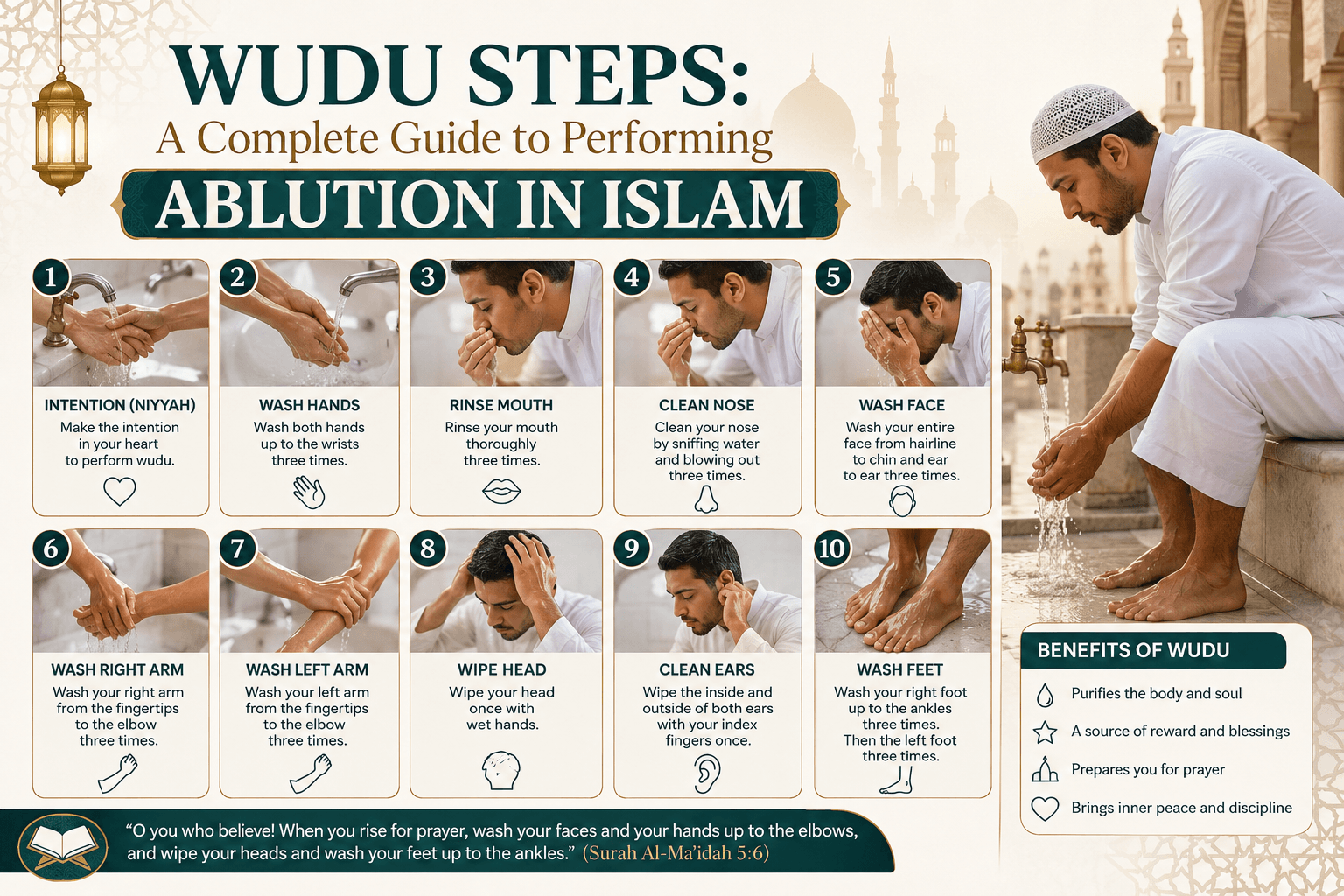
Wudu Steps : Wudu (ablution) is an essential act of purification that prepares Muslims for prayer and other acts of worship. Before standing before Allah in Salah, Muslims cleanse specific parts of the body in a prescribed order. Understanding the correct Wudu steps ensures that your prayer is performed with the required state of purity.
Whether you are a beginner, a new Muslim, or simply looking to refresh your knowledge, this guide explains each step of Wudu in a simple and practical way for Muslims living in the USA and Canada.
What Is Wudu?
Wudu is the Islamic practice of ritual purification performed before Salah (prayer). It involves washing specific body parts with clean water while intending to prepare for worship.
Beyond physical cleanliness, Wudu symbolizes spiritual purification and mindfulness. It reminds believers to approach worship with sincerity, discipline, and respect.
Why Is Wudu Steps Important?
Wudu is a prerequisite for many acts of worship, particularly the five daily prayers.
Some key reasons why Wudu is important include:
- It prepares Muslims for Salah.
- It promotes cleanliness and personal hygiene.
- It serves as an act of obedience to Allah.
- It helps believers approach worship with focus and humility.
- It is a source of spiritual purification.
Without valid Wudu, obligatory prayers are generally not considered valid.
Wudu Steps: How to Perform Wudu Steps Correctly
Follow these steps in order to perform Wudu properly.
1. Make the Intention (Niyyah)
Begin with the sincere intention in your heart that you are performing Wudu for the sake of Allah to prepare for worship.
The intention does not have to be spoken aloud.
2. Say “Bismillah”
Start by saying:
“Bismillah” (In the name of Allah).
This is a recommended Sunnah practice before beginning Wudu.
3. Wash Both Hands
Wash both hands thoroughly up to the wrists three times.
Be sure water reaches between the fingers and covers all areas.
4. Rinse the Mouth
Take water into your mouth and rinse it three times.
Move the water around inside the mouth before spitting it out.
5. Clean the Nose
Gently inhale water into the nostrils and blow it out three times.
Avoid inhaling too forcefully.
6. Wash the Face
Wash the entire face three times.
The face includes:
- From the forehead to the chin
- From one ear to the other
Ensure all parts are covered evenly.
7. Wash the Arms
Wash the right arm from fingertips to above the elbow three times.
Repeat the same for the left arm.
Do not leave any dry spots.
8. Wipe the Head (Masah)
Wet your hands and wipe them over the head once from front to back and back again, according to the Sunnah method.
Only a light wipe is required rather than washing.
9. Wipe the Ears
Using the moisture remaining on your hands:
- Wipe inside the ears with the index fingers.
- Wipe behind the ears with the thumbs.
This is generally performed once.
10. Wash the Feet
Wash the right foot up to and including the ankles three times.
Repeat with the left foot.
Make sure water reaches between all the toes.
Summary of Wudu Steps
| Step | Action |
|---|---|
| 1 | Make intention (Niyyah) |
| 2 | Say Bismillah |
| 3 | Wash hands three times |
| 4 | Rinse mouth three times |
| 5 | Clean nose three times |
| 6 | Wash face three times |
| 7 | Wash arms to elbows three times |
| 8 | Wipe head once |
| 9 | Wipe ears once |
| 10 | Wash feet to ankles three times |
Common Mistakes During Wudu Steps
Many people unintentionally make mistakes that may affect the completeness of their Wudu.
Common examples include:
- Missing parts of the elbows or ankles
- Forgetting to wash between the fingers or toes
- Rushing through the process
- Leaving dry patches on the skin
- Performing the steps out of order without a valid reason
Taking your time helps ensure proper purification.
What Breaks Wudu?
A person generally needs to renew Wudu after events such as:
- Using the toilet
- Passing wind
- Deep sleep that causes loss of awareness
- Loss of consciousness
- Other situations recognized in Islamic jurisprudence according to scholarly interpretation
When in doubt about specific circumstances, consult a qualified scholar from your school of thought.
Benefits of Performing Wudu
Performing Wudu regularly offers both spiritual and practical benefits.
Spiritual Benefits
- Prepares the heart for worship
- Encourages mindfulness
- Demonstrates obedience to Allah
- Purifies before standing in prayer
Physical Benefits
- Promotes cleanliness
- Encourages regular hand and face washing
- Helps maintain personal hygiene throughout the day
Teaching Wudu to Children
Parents can help children learn Wudu by:
- Demonstrating each step slowly
- Practicing together before Salah
- Using repetition and encouragement
- Explaining the meaning behind purification
- Making learning interactive and enjoyable
Early education helps children build lifelong habits of worship.
Learning Wudu Online
Many Muslims living in the USA and Canada may not have easy access to local Islamic classes. Online Quran and Islamic education can provide personalized guidance on Wudu, Salah, Tajweed, and Quran recitation.
Structured lessons with qualified teachers can help learners of all ages gain confidence in practicing Islam correctly from home.
Frequently Asked Questions (FAQs)
1. What are the basic Wudu steps?
The basic steps include making the intention, washing the hands, rinsing the mouth and nose, washing the face and arms, wiping the head and ears, and washing the feet in the prescribed order.
2. Is Wudu required before every prayer?
If your previous Wudu has not been invalidated, you may use it for multiple prayers. Otherwise, you should perform Wudu again.
3. Can I perform Wudu with a small amount of water?
Yes. Islam encourages avoiding waste, and valid Wudu can be completed with a modest amount of clean water.
4. Do I have to repeat Wudu if I make a mistake?
Minor mistakes may not require repeating the entire Wudu, but missing an obligatory part should be corrected. If uncertain, seek guidance from a knowledgeable scholar.
5. Is Wudu necessary before reading the Quran?
Many scholars recommend being in a state of Wudu when touching the physical Mushaf (printed Quran). There are differing scholarly opinions on some related details.
6. Can children learn Wudu before they start praying regularly?
Yes. Teaching Wudu at a young age helps children become familiar with Islamic practices and prepares them for consistent prayer.
7. How long does Wudu take?
Most people can complete Wudu properly in just a few minutes while ensuring every required step is performed carefully.
Final Thoughts
Learning the correct Wudu steps is one of the foundations of Islamic worship. By performing Wudu with care and understanding, Muslims prepare themselves physically and spiritually for Salah and other acts of devotion.
For Muslims in the USA and Canada, mastering Wudu can strengthen daily religious practice and foster a deeper connection with faith. Taking the time to learn and perform it correctly is an investment in both worship and personal discipline.